October 21, 2026
Can You Pay Off an SBA 504 Loan Early in Alabama?


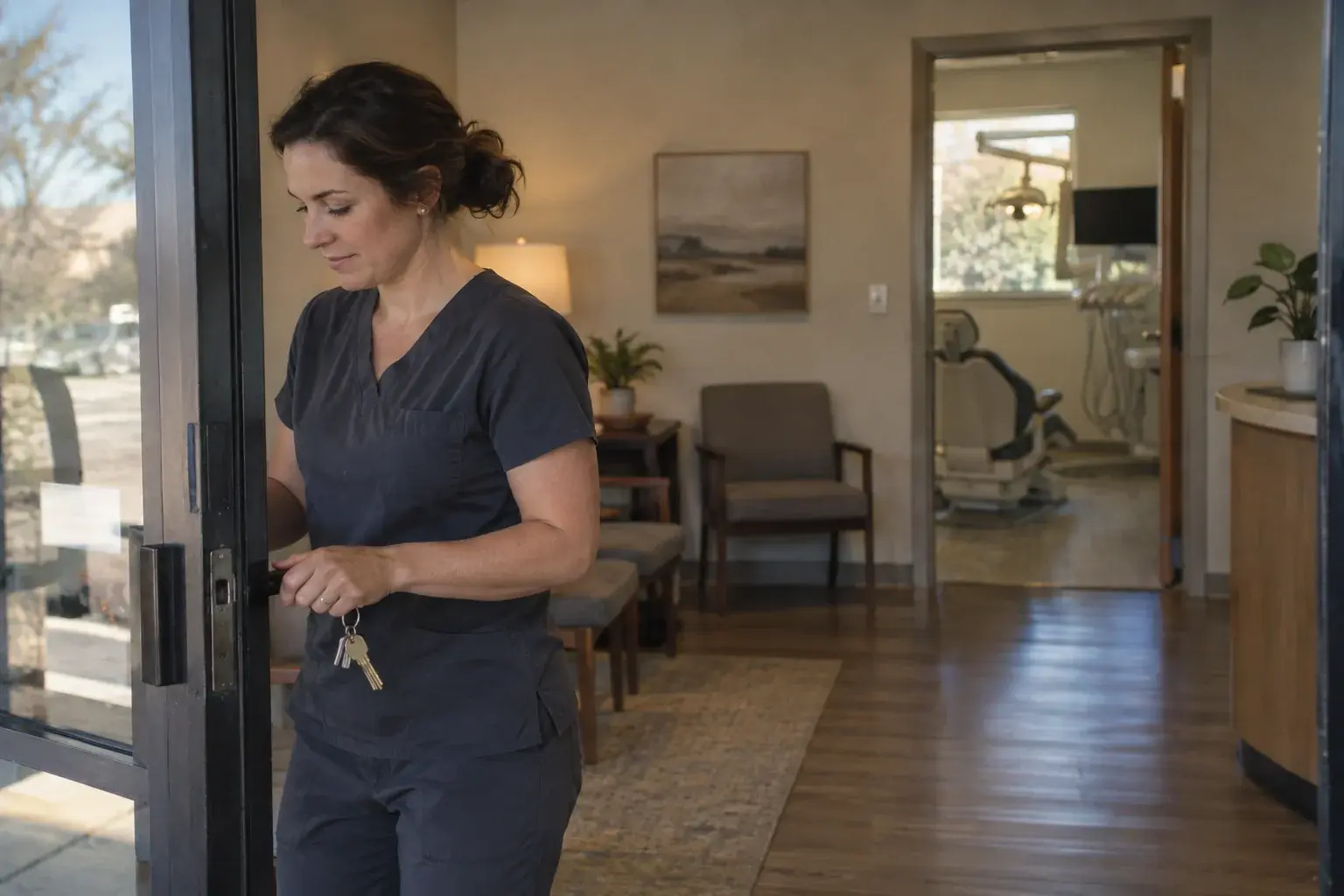
If you run a dental practice in Alabama, you already know the rent check is one of your biggest fixed costs. Buying the building your practice sits in, or the one you want to move into, can change that math. This guide explains how an SBA 504 loan can be used to buy a dental office in Alabama, what the loan can and cannot pay for, and what to sort out before you apply.
Alabama Small Business Capital (ASBC) is a private, non-profit Certified Development Company with over 35 years of experience helping Alabama business owners. A Certified Development Company, or CDC, is the SBA-approved organization that provides the long-term, fixed-rate portion of a 504 loan. Here is what we walk dentists through most often.
Yes. A dental practice is an operating, for-profit business, and the 504 program is designed for businesses that buy or build the property they occupy. SBA describes permitted uses as the purchase, construction, or renovation of existing buildings or land, plus long-term machinery and equipment with a useful life of at least 10 years, and certain refinancing.
In most cases that covers three common dental scenarios: buying the building your practice already leases, buying a different building and moving the practice, or building a new office on land you purchase. Each one still has to pass underwriting, and approval is never guaranteed.
A 504 loan is a team effort. Your bank or credit union typically provides the largest share as a first-lien loan. A first lien simply means that lender gets paid first from the property if something goes wrong. The CDC provides a second portion funded through an SBA-backed debenture. A debenture is a long-term loan sold to investors, and it is what lets the CDC offer a fixed rate over a long term. You put in the remaining share as your down payment.
SBA says 504 terms of 10, 20, and 25 years are available, and the rate on the CDC portion is tied to an increment above the market rate for 10-year U.S. Treasury issues. Your bank sets its own rate and terms for its portion. Our SBA 504 loan page explains the structure in more detail, and our 504 loan calculator lets you test a rough payment.
The table below shows the 504 rates posted on the ASBC website for October 2026. Rates are set monthly and change, so treat these as a snapshot and not a quote. They apply to the CDC debenture portion of the loan, not to your bank's portion.
TermTypeRate (October 2026)25-YearDebentures6.974%25-YearRefi6.975%20-YearDebentures6.968%20-YearRefi6.969%10-YearDebentures6.600%10-YearRefi6.601%
For an existing building, SBA rules generally require your practice to permanently occupy and use at least 51 percent of the rentable space. You may lease up to 49 percent to other tenants. For new construction, the minimum is generally 60 percent, and you may lease up to 20 percent, with a plan to grow into the rest of the space over time.
Here is a hypothetical example. Say a dentist is looking at a 4,000-square-foot existing building. The practice would need to occupy at least 2,040 square feet, which is 51 percent. If the dentist uses 3,000 square feet, that is 75 percent, and the remaining 1,000 square feet could be leased to a tenant such as an insurance office or a small professional firm.
Now say the same dentist plans a 6,000-square-foot new building. The practice would generally need to occupy at least 3,600 square feet. Up to 1,200 square feet could be leased out, and the other 1,200 square feet would be space the practice plans to grow into, generally within a set number of years under SBA's rules.
The 504 program is built for fixed assets. For a dental office, the usual items include:
SBA does not allow 504 proceeds to be used for working capital or inventory. If you also need money for supplies, payroll, or a practice purchase, that usually calls for a different financing source. We can help you sort out which piece belongs where, and our page for Alabama dentists covers the basics.
To be eligible, your practice must be a for-profit operating business that is small under SBA standards. Under the 504 alternative size standard, a business generally qualifies if its tangible net worth is not more than $20 million and its average net income after federal income taxes is not more than $6.5 million over the two most recently completed fiscal years. Affiliated businesses are counted together. Most single-location dental practices are well below those limits, but your CPA can help you check yours.
Ownership matters too. Under an SBA procedural notice that took effect March 1, 2026, all direct and indirect owners and required guarantors of a 504 applicant generally must be U.S. citizens or U.S. nationals who live in the United States. Lawful permanent residents do not count toward that requirement under the notice. If you have an associate buying into the practice or an outside investor, bring that up early, because ownership affects eligibility. SBA also issued a new operating manual, SOP 50 10 8.1, effective October 1, 2026, so ask us to confirm the rules that apply on your application date.
The exact steps vary by deal, but most Alabama dental office projects follow this order.
Timelines vary with the property, the lender, and how quickly documents come in, and nothing here is a promise of timing. Our post on how long an SBA 504 loan takes goes through the typical stages.
Leasing keeps your upfront cash low and puts maintenance on the landlord. Buying gives you control of the space, protection from rent increases, and a building that can build equity over time. It also means taking on property taxes, insurance, and repairs.
The right choice depends on your practice, your location, and your plans. A dentist in Montgomery, Tuscaloosa, or Auburn may face a very different property market than one in Birmingham or Huntsville, so local advice matters. For tax questions, such as how depreciation or interest might be treated, talk with your CPA or attorney. We explain the loan, not your tax outcome.
For many dentists who plan to stay in one location for years, an SBA 504 loan is worth a close look. It is designed for owner-occupied real estate and long-term equipment, it offers long terms, and the CDC portion carries a fixed rate. Whether it is the best fit depends on your numbers, your ownership, and your timeline, which is why a short conversation up front is usually worthwhile.
An SBA 504 loan can help a dentist move from paying rent to owning the office. It works best when the practice will occupy most of the building, the owners meet SBA's eligibility rules, and the project is real estate or long-term equipment. Start by deciding which path fits you, then check the current rates and rules with someone who handles these loans every day.
If you are an Alabama dentist thinking about owning your building, call ASBC at (334) 209-2600 or reach out through our contact page. We will walk through your options and tell you plainly whether a 504 loan makes sense.
Generally not by itself. The 504 program funds real estate and long-term equipment, and SBA does not allow working capital or inventory. Buying the practice itself usually involves other financing, though the 504 loan may fit the building portion.
In some cases. SBA allows long-term machinery and equipment with a useful life of at least 10 years. Whether a specific item qualifies depends on the item and the project, so ask us before you buy.
Often, yes. For an existing building, you generally need to occupy at least 51 percent and may lease up to 49 percent. For new construction, you generally need to occupy at least 60 percent and may lease up to 20 percent.
Under the 504 alternative size standard, tangible net worth generally must be $20 million or less, and average net income after federal taxes must be $6.5 million or less over the two preceding fiscal years. Affiliates are included.
The CDC portion of a 504 loan carries a fixed rate, and SBA ties it to market rates on 10-year Treasury issues. Your bank sets its own rate and terms for its portion. Rates are set monthly and change, so ask for current numbers.