October 23, 2026
Buy a Dental Office With an SBA 504 Loan in Alabama
.svg)
.svg)
.svg)
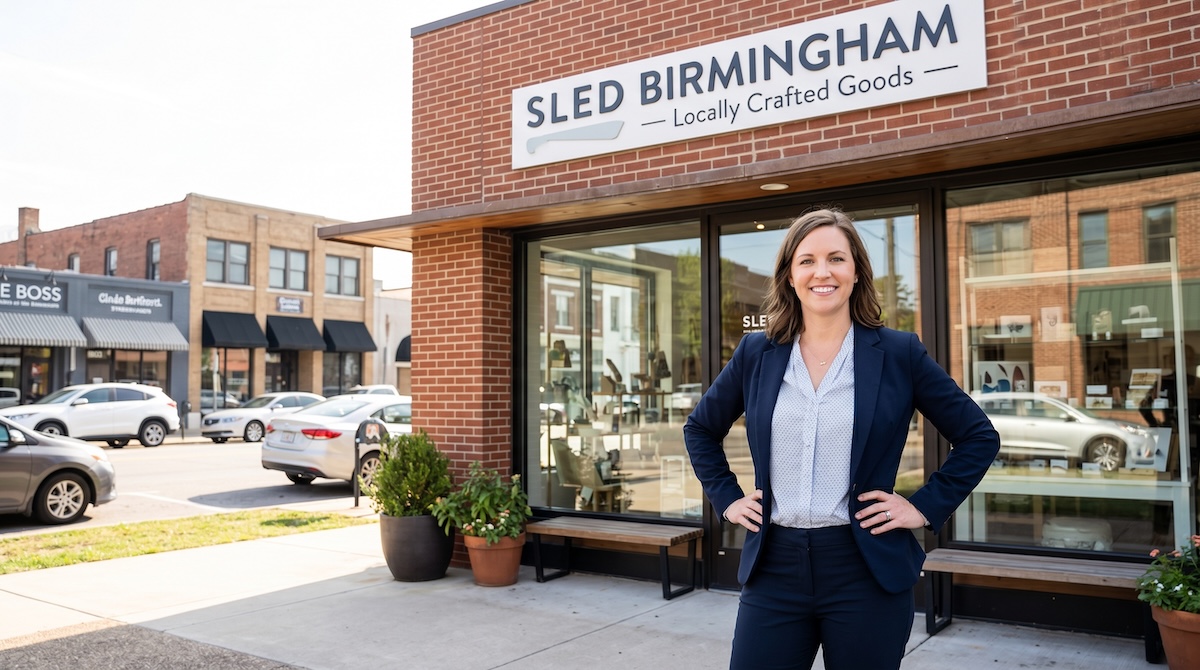
Birmingham has become an increasingly competitive place to lease commercial space. Office asking rents now average around $21.85 per square foot, with premium locations pushing past $32. Industrial space has tightened considerably, with Q1 2025 vacancy at 8.8% (the lowest since late 2022) and average asking rents climbing to $7.22 per square foot. Retail corridors across Cahaba Commons, downtown, and the Five Points South area continue to lease space quickly, and the metro's 2.2% unemployment rate (December 2025) reflects one of the tightest labor markets in the region.
For small business owners, this is a real problem. When rent goes up, the only lever most businesses have is to absorb the cost, renegotiate under unfavorable terms, or move. None of those options build anything.
That is why a growing number of Birmingham-area business owners are choosing a different path: buying their building instead of renting it.
Birmingham's commercial real estate market is holding steady in a way that favors long-term owners more than long-term tenants. The metro was designated a federal Tech Hub region in 2025 and received a $44 million grant to support the Birmingham Biotechnology Hub. UAB continues to expand as the area's largest employer, and other anchors including Wells Fargo, Amazon, St. Vincent's Health System, Children's of Alabama, AT&T, and Honda Manufacturing of Alabama are making long-term commitments to the region.
This kind of steady institutional investment puts persistent pressure on commercial space, particularly in corridors near UAB, the Innovation Depot, and the major suburban business districts. For tenants, that translates to lease renewals at higher rates and landlords with less incentive to negotiate.
For business owners who have reached a level of stability and want predictability in their occupancy costs, ownership starts to look like the more rational choice.
Leasing commercial space creates one of the most underappreciated risks in small business: the lack of control over one of your largest fixed costs. A landlord can choose not to renew your lease, raise your rent substantially at renewal, or sell the building entirely. None of that risk exists when you own your space.
Ownership also converts a monthly expense into an asset. Instead of paying rent to a landlord, a business owner builds equity in a property. In a market like Birmingham, where commercial property values have held up well and the metro's economic base continues to diversify, that equity can become a meaningful part of a business owner's total financial picture.
There is also an operational benefit that gets overlooked. When you own your space, you control it. You can build out the space to fit your business, invest in improvements without landlord approval, and make long-term decisions without worrying about what happens when your lease expires.
The biggest barrier to commercial property ownership for most small business owners is the down payment. Conventional commercial loans typically require 20% to 30% down, and they rarely offer fixed interest rates for the full loan term. For a $1 million property, that means putting $200,000 to $300,000 in cash on the table before you even open the door.
The SBA 504 loan program changes that equation.
The 504 is a three-party financing structure designed specifically to help small businesses acquire commercial real estate and equipment. The structure works like this:
On a $1 million project, that means you may need as little as $100,000 to close rather than $200,000 to $300,000 under a conventional structure. The SBA 504 portion carries a fixed interest rate for the life of the loan, with repayment terms up to 25 years for real estate. The rate is set when the loan funds and does not change.
That fixed rate matters. In a market where rents can be renegotiated upward every few years, locking in a predictable monthly payment for 25 years provides the kind of financial stability that a lease simply cannot offer.
The 504 program is available to for-profit businesses that meet the SBA's size standards. Specifically:
The program covers a wide range of property types common in the Birmingham market, including office buildings, medical and dental offices, warehouses, retail facilities, light manufacturing, and mixed-use properties. It can also be used to build a new facility or renovate an existing one.
Businesses in industries including healthcare, biotechnology, professional services, financial services, manufacturing, and retail have all used 504 loans to acquire or build their Birmingham-area facilities.
One of the reasons many Birmingham business owners have not explored the 504 program is that it sounds complicated. In practice, the process is more straightforward than most people expect.
It starts with a conversation with a Business Development Officer who evaluates whether your project fits the program. If it does, the application moves into underwriting, where your financial documents are collected and reviewed. From there, SBA approval typically takes around 14 days once the application is submitted. Loan closing generally follows within two to three weeks of approval, and funding comes approximately 45 days after closing for non-construction projects.
Alabama Small Business Capital (ASBC) has been working through this process with Alabama businesses for more than 35 years. ASBC's team has helped close more than $14 billion in 504 projects across the Southeast and works directly with the Birmingham-area lender community, so your existing bank relationship does not need to change.
The SBA charges fees on the 504 portion of the loan, which total approximately 2.17% of the SBA loan amount. These fees are financed into the loan itself, so they do not require additional cash at closing. An SBA-approved attorney handles the closing and typically charges around $2,500, which can also be financed.
The total cost of borrowing through the 504 program is generally lower than a comparable conventional loan, particularly when you factor in the fixed rate on the SBA portion over a 20 or 25-year term.
Consider a Birmingham-based business currently renting 3,000 square feet of office space at $22 per square foot annually. That is $66,000 per year, or $5,500 per month, with no equity accumulating and no protection against future rent increases.
With a 504 loan, that same business might purchase a comparable owner-occupied property and set a fixed monthly payment that covers both the bank loan and the SBA debenture. Over 25 years, a significant portion of that payment builds equity in an asset the business owns outright.
The numbers will vary based on property price, interest rates, and the specific terms of the bank's first lien. But the fundamental math favors ownership when a business has reached a stable operating position and expects to occupy its space long-term.
The 504 is not the right solution for every business. It works best for businesses that:
For businesses that meet those criteria, the 504 program is often the most cost-effective path to ownership available.
Can I use an SBA 504 loan to buy commercial real estate in Birmingham?
Yes. The SBA 504 loan program is specifically designed for owner-occupied commercial real estate purchases. Eligible properties in Birmingham include office buildings, retail spaces, medical and professional offices, warehouses, and light industrial facilities. The business must occupy at least 51% of an existing building, or at least 60% of a newly constructed one.
How much do I need for a down payment on a 504 loan?
Most borrowers contribute 10% of the total project cost. Some situations require a larger down payment, typically 15%, including startup businesses operating for less than two years and special-purpose properties. ASBC can help you determine the exact equity requirement for your specific project.
How is the SBA 504 loan rate determined, and is it fixed?
The SBA 504 rate is tied to the 10-year U.S. Treasury yield and is set through the sale of government-guaranteed debentures. Rates are published monthly by NADCO. Once your loan funds, the rate on the SBA 504 portion is fixed for the life of the loan. Your final rate is determined at the time of funding, not at the time of application. The bank's portion of the loan carries a market rate set by your participating lender.
What can the SBA 504 loan be used for beyond the purchase price?
The 504 can cover a range of costs beyond the property purchase price. Eligible uses include new construction, renovation and leasehold improvements, machinery and equipment with a useful life of at least 10 years, soft costs such as architect fees, and SBA and lender fees. Working capital, inventory, and rolling stock are not eligible uses.
How long does the SBA 504 loan process take in Birmingham?
The typical timeline from completed application to funding runs approximately 60 to 75 days for standard acquisitions. SBA approval generally takes about 14 days from submission, closing follows within two to three weeks of approval, and funding comes approximately 45 days after closing. Working with an experienced CDC and a complete application package is the most reliable way to keep the process on schedule.
Alabama Small Business Capital (ASBC) is a private, non-profit Certified Development Company that administers the SBA 504 Loan Program for Alabama-based small businesses. To speak with an ASBC Business Development Officer about a Birmingham commercial property purchase, call (334) 209-2600 or email info@asbc504.com.